
Speech & Language Therapy
Helping every child find their voice
What is Speech Therapy?
Speech Therapy, or Speech Language Pathology (SLP), is a specialised healthcare field focused on evaluating, diagnosing, and treating speech and language disorders across all ages.
From first words to complex conversation, our speech and language pathologists evaluate and treat articulation, language, fluency, social communication and AAC needs.
- Improve feeding and swallowing skills.
- Effective AAC use for neuro-divergent population.
- Improved speech clarity and intelligibility.
- Expanded vocabulary and sentence structure.
- Stronger social communication and confidence.
- Enhanced functional and spontaneous communication.
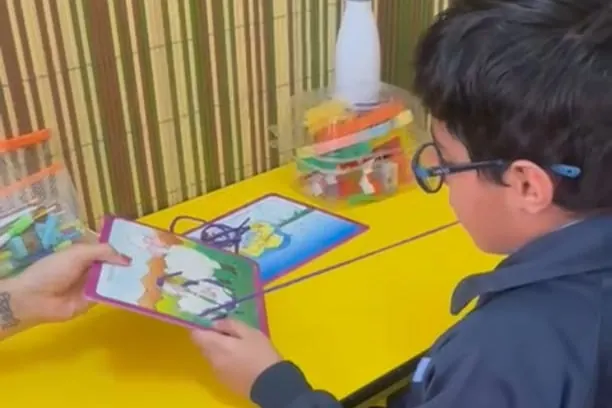
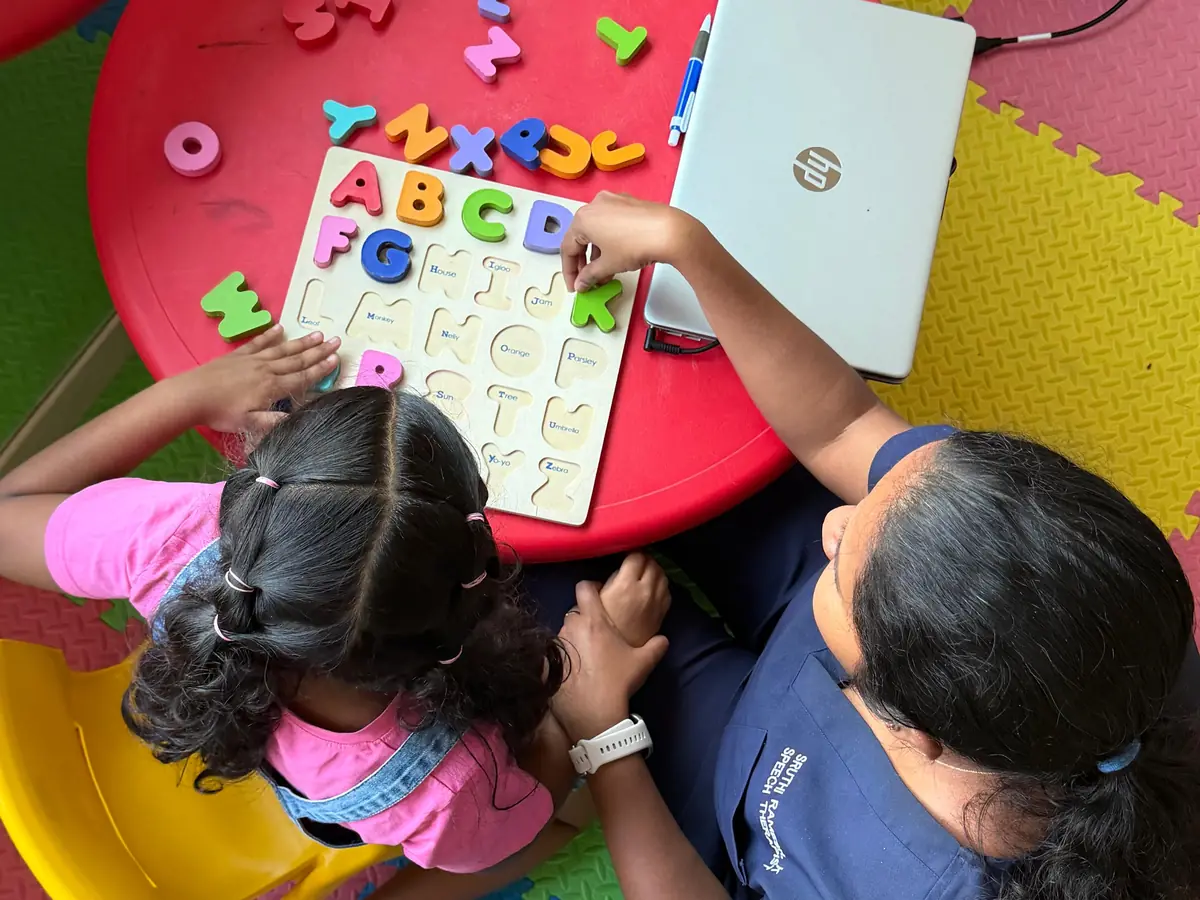
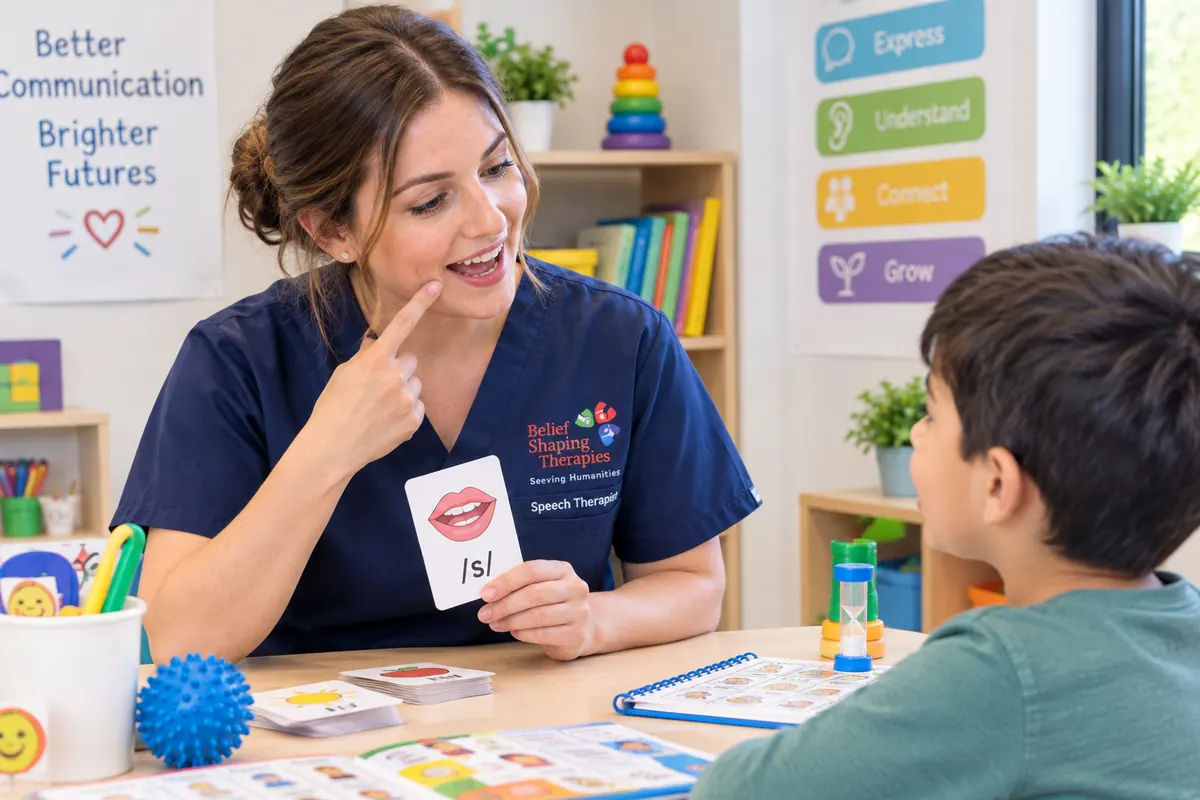
Speech therapy in Dubai
What speech disorders are, what happens in a session and the signs to watch for in your child.
Speech Therapy
Conversing / speaking is inherent to human beings hard-wired biologically. One doesn’t need special course or classes for informal talking. It comes naturally to every human being. What no one mentions is the complexity of body’s vocal communication system, and therefore many infants, kids, adolescents or adults suffer from speech disorder. Parents or Individuals searching for “Speech therapy in Dubai” need to understand that verbal communication exploits several body organs from brain, chest, throat to tongue and head. If these body units work in tandem, the resultant speech is clear, precise, cohesive and sends across the intended thoughts, feelings, and ideas.
Even so, not everyone is supported with perfect speech. If you have come this far, it only means you are seeking speech disorder support for your little one or an elder in your family. This page provides all the information to you as a parent / family caregiver so that you can make informed decision.
So, what exactly is speech disorder?
In short, it is a vocal and / or language disorder. When a child (including neonates) is unable to produce sounds that result in clear, audible, precise words it is called speech disorder. It can happen due to several reasons: from muscle and nerve damage to impact on vocal structure and even malfunctioning of secondary organs of human body.
Our speech-language pathologists (SLP’s), experts in this domain, address this impairment through assessment followed by diagnosis, speech, language management, and swallowing issues. This includes neonates and geriatric individuals. As someone looking for speech therapy centres, you need to understand that many elders lose their ability to speak clearly, especially after suffering a stroke or accidental fall/s.
As mentioned above, speech disorders can affect people of all age groups and genders. As a parent, you don’t have to be disheartened. First and foremost, it can be addressed through speech-language pathologists, and secondly, your loved one is not the only exception. Data shows that approximately 5% of children aged between 3 and 17 have distinct speech disorder. Then there are about 7% to 12% who experience broader communication, language, or voice disorders.
Are you interested in speech therapy cost and session plans in Dubai? Yes! Then connect with us right now.
What happens in a speech therapy session?
Our speech-language pathologists are trained to provide individualized, evidence-based interventions for neuro-divergent children, incorporating techniques such as:
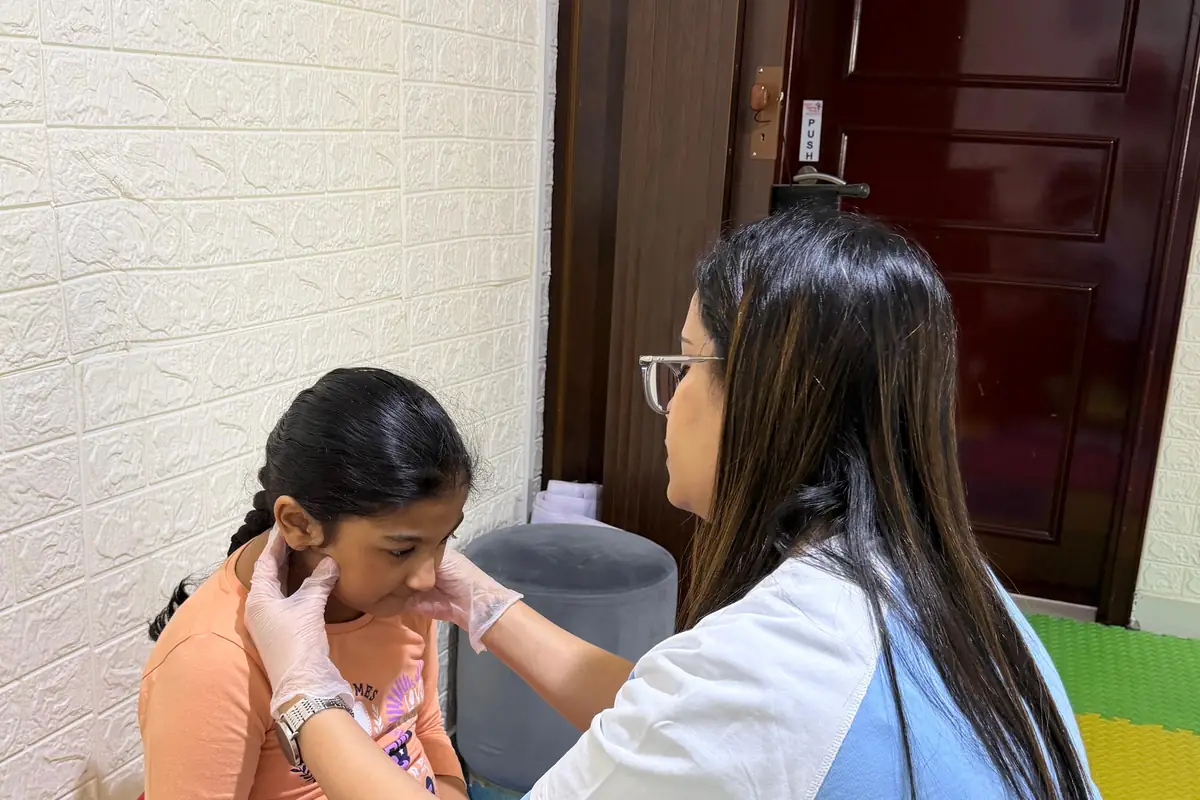
- Prompts for Restructuring Oral Muscular Phonetic Targets (PROMPT): The assigned pathologist uses physical touch, typically around jaw, throat, lips, tongue to help fetch correct speech and sound production.
- Gestalt Language Processing (GLP): Learning and communicating using whole, multi-word phrases (script).
- Oral Placement Therapy (OPT): A therapeutic approach where the jaw, lips, tongue, and soft palate (mouth’s articulators) are worked upon to improve speech clarity.
- Augmentative and Alternative Communication (AAC): Our speech-language pathologists exploit several methodologies to augment or replace spoken language. This is especially true for kids who suffer from severe expressive communication disorder
- Myo-functional therapy: A methodology that helps kids manage muscles of the face, mouth, tongue, and throat.
SLP’s also assist functional oral-motor skills, feeding development, and safe and effective mealtime participation in children with special needs who struggle with Oro-sensorimotor and feeding issues.
Signs your child may need speech therapy
- Infants / Newborn: Choking while sucking or swallowing. Delayed or irregular response to sounds. Lack of eye contact are some of the signs a parent needs to watch for.
- Toddlers: Visible toddler signs are divided in three distinct periods. 12-month-olds: Unable to respond to name, point out correctly or create sounds. 18-month-olds: Lack of vocabulary, expressive words. 24-month-olds: Failing to connect two or more words.
- Kids / Children: Unclear speech or words that sound strange. Stuttering or pausing while speaking. Failing to fetch words.
A speech disorder is a medical, developmental setback. The afflicted toddler, child or an adolescent finds it difficult to form appropriate sounds (Regulating airflow and muscle control) needed to speak clearly. This results in faulty pronunciation. On the other hand, language disorders are more common where your child fails to string together several words, due to lack of understanding.
Our child and neonatal speech-language therapist is a domain expert who diagnoses, and caters to communication, language development, safe feeding and swallowing disorders in infants and children. Conditions we help with include speech delay, stuttering, autism, AAC needs.
Belief Shaping Therapies not only addresses kids and adolescents (paediatric development.) vis-à-vis speech and language issues but also takes care of infants / toddlers (infant/neonates) too.
From the first few clearly spoken words to complex and cohesive conversation, our speech-language pathologists work on articulation, language, fluency, social communication and swallowing issues using scientific tools and practices.
Meet our DHA-licensed speech therapists with the first free consultation for more information.
Types of speech disorder: Online and in-centre speech therapy in Dubai
Stuttering, apraxia and dysarthria explained for parents and family caregivers.
Stuttering
Fumble, stammer, these are some of the synonyms you must have often heard vis-a-vis speech delivery. It typically pauses the flow of words. Although stuttering sounds innocent, casual flaw, it can hamper communication in a big way. Stuttering results because of repetition of words, at times even sounds and vowels are reiterated. Other stuttering causes include:
- Physical Airflow Issue: Producing speech sounds becomes difficult.
- Blocks: Physical airflow or speech sounds get temporarily stuck.
- Prolongations: Stretching certain words or sounds.
- Situational Stuttering: It can vary depending on the situation.
Stuttering may intensify when your little one is stressed, excited or conscious. Frustration at his / her inability to produce the right word, with the right sound may aggravate / pronounce this medical setback even more. As a parent you should also be aware that stuttering can give birth to behavioural and physical changes too. Your little one may start to blink rapidly, the expression on his or her face may change, the lips might quiver and your loved one may even exhibit sudden head movements.
Types of Stuttering
As a parent you also need to understand that stuttering can occur because of two distinct reasons.
- Developmental stuttering: As the name suggest it affects kids and young children who are still learning the finer nuances of speech and language rules. One interesting fact about developmental stuttering is the genetic factor.
- Neurogenic stuttering: This typically happens due to brain damage. This could either be developmental or traumatic / medical, such a stroke / accident, especially in elderly folks.
Apraxia
Everyone knows how complex the brain is. What few realise is the role it plays in speaking. How? Brain signals not only cause body organs to react, but it also synchronises these events. It sends out orders to the vocal cords, to the lips, tongue and at the same time monitors air flow so that every word delivered sounds the way it should.
Although speaking is a natural, unconscious act, the brain continuously works in the background. The brain of Apraxia affected individuals typically lack robust motor skills, that disallows children and adults to form the sounds of speech correctly
Dysarthria
Speech disorder caused by dysarthria affects the brain which in turn develops weakness in that afflicted individual’s face, lips, tongue, throat, or chest. In simple words, muscle weakness snatches control over these organs, and the result, speech / language disorder.
Mentioned below are some of the symptoms if your loved one is suffering from dysarthria:
- Incoherent speech.
- Words that sound more like mumble.
- Failing to hold on to momentum. Speech could be fast or too slow.
- Inaudible words.
- Lack of organ movement (lips, tongue, jaw etc).
Meet our DHA-licensed speech therapists for more information.
Speech and language issues we help with
Choose an age group to see the difficulties our speech-language pathologists work on.
Speech Sound Disorders
- Difficulty pronouncing certain sounds clearly.
- Replacing one sound with another, such as saying “tat” instead of “cat.” Leaving out sounds in words, such as saying “ca” instead of “car.”
- Speech may be difficult for others to understand, especially unfamiliar listeners.
- The child may have difficulty putting sounds together correctly to say words clearly.
Late talking
- The child may start talking later than expected for their age.
- They may use fewer words than other children of the same age.
- They may have difficulty putting words together to make short sentences.
- They may use gestures, pointing, or sounds more often than words to communicate.
- They may find it difficult to express their needs, wants, thoughts, or ideas using words.
Autism-Related Communication Difficulties
- Difficulty expressing wants, needs, feelings, or ideas using words or other forms of communication.
- May have difficulty starting or maintaining conversations with others.
- Difficulty understanding and responding to questions or instructions.
- May find it challenging to take turns, share attention, or interact with others.
- Difficulty understanding facial expressions, gestures, body language, or social cues.
Stuttering/Stammering
- Repeating sounds, parts of words, or whole words while speaking.
- Getting stuck on a sound or word and finding it difficult to continue.
- Stretching sounds for longer than usual.
- Taking long pauses or struggling to get words out.
- Feeling worried, frustrated, or avoiding speaking because of stuttering.
Childhood Apraxia of Speech
- Difficulty planning the movements needed to speak.
- The child may know what they want to say but struggle to say it clearly.
- Saying the same word differently each time.
- Finding it difficult to move smoothly from one sound or syllable to another.
- Speech may be unclear, especially when saying longer or unfamiliar words.
Feeding Difficulties
- Difficulty chewing food properly or managing food in the mouth.
- Difficulty drinking from a cup, bottle, or straw.
- Coughing, choking, or gagging during meals.
- Being very selective about foods, textures, tastes, or temperatures.
- Taking a long time to finish meals or becoming upset during mealtimes.
ADHD-Related Communication Difficulties
- Difficulty paying attention and listening during conversations.
- May interrupt others or have difficulty waiting for their turn to speak.
- Difficulty organizing thoughts and expressing ideas clearly.
- May talk too much, speak quickly, or change topics frequently.
- Difficulty following instructions, remembering information, or staying on topic.
Cluttering
- Speaking very quickly, making speech difficult to understand.
- Mumbling or blending words together while talking.
- Leaving out or changing sounds and syllables in words.
- Frequently pausing, restarting, or changing sentences while speaking.
- Having difficulty organizing thoughts and expressing them clearly.
Hearing & Language Difficulties
- Difficulty hearing or understanding what others are saying, especially in noisy places.
- Difficulty following conversations or instructions.
- Taking longer to understand spoken information.
- Difficulty finding the right words or expressing thoughts clearly.
- Trouble communicating effectively with family, friends, colleagues, or others.
Pediatric Voice Disorders
- Voice may sound hoarse, rough, breathy, or weak.
- The child may speak too loudly or too softly.
- Their voice may sound unusually high or low for their age.
- The child may experience voice tiredness or discomfort after speaking.
- Frequent shouting, throat clearing, or straining the voice may affect voice quality.
Aphasia
- Difficulty finding the right words when trying to speak.
- Difficulty understanding what other people are saying.
- Difficulty speaking in clear and meaningful sentences.
- Difficulty reading or understanding written information.
- Difficulty writing, spelling, or expressing thoughts in writing.
Cognitive-Communication Difficulties
- Difficulty paying attention and staying focused during conversations.
- Difficulty remembering names, information, or things that were just discussed.
- Finding it hard to organize thoughts and explain ideas clearly.
- Difficulty solving problems, making decisions, or understanding information.
- Losing track of conversations or finding it difficult to stay on topic.
Motor Speech Difficulties (Dysarthria and Apraxia)
- Words may sound unclear or difficult to understand.
- Problems controlling the lips, tongue, or jaw while speaking.
- The speed of speech may be noticeably different from usual.
- The person may have difficulty speaking loudly enough to be heard.
- They may know what they want to say but struggle to move their mouth correctly to produce the word.
- The same word may sometimes be said correctly and sometimes incorrectly.
Voice Disorders
- The voice may sound rough, strained, or different from usual
- The person may find it difficult to speak loudly enough, especially in groups.
- The voice may suddenly crack, break, or change in pitch while speaking
- Voice becomes tired, weak, or uncomfortable after talking for a long time
Fluency Disorders
- Repeating sounds, syllables, or words while speaking.
- Knowing what to say but having difficulty getting the word out.
- Holding a sound for longer than usual.
- Having unexpected pauses or breaks while talking.
- Talking very quickly, making speech difficult for others to follow.
- Speech may sound interrupted, uneven, or less natural than usual.
Dementia
- Difficulty remembering names or the right words during conversation.
- Asking the same question or saying the same thing repeatedly.
- Trouble following conversations, questions, or instructions.
- Forgetting what they were talking about or moving from one topic to another.
- Knowing what they want to say but struggling to explain it clearly.
- Forgetting recent conversations, events, or important information.
- Trouble understanding written information or writing messages.
- Difficulty understanding social situations, facial expressions, or appropriate conversational behavior.
Parkinson’s Disease: Speech & Communication Difficulties
- Soft or quiet voice: The person may speak very softly and be difficult to hear.
- Mumbled or unclear speech: Words may sound less clear because the speech muscles are not moving as strongly.
- Speaking too quickly: The person may rush through words or sentences.
- Monotone voice: Speech may sound less expressive, with little change in pitch or loudness.
- Difficulty starting speech: The person may take longer to begin speaking or experience pauses.
- Reduced facial expression: Less movement of the face can make emotions and communication harder to understand.
- Difficulty finding words or organizing thoughts: Some people may have difficulties with thinking, word retrieval, or maintaining a conversation.
- Swallowing difficulties: Problems chewing or swallowing food, liquids, or saliva may occur
Areas we focus on
Feeding and Oral Placement Therapy
Developing safe and functional feeding skills, addressing oral-motor, sensory, chewing, swallowing, and food-selectivity difficulties.
Gestalt Language Processing (GLP) & Natural Language Acquisition (NLA)
Individualized, neuro-diversity-affirming support for children who use gestalts or scripts, focusing on functional communication, flexible language development, and progression toward increasingly self-generated language.
PROMPT-Based Speech Therapy
Support speech production by addressing motor-speech and articulatory difficulties
Adult & Stroke Rehabilitation
Individualized speech and language therapy for adults following stroke, focusing on communication, speech, cognitive-communication, and swallowing difficulties to support functional independence and participation in daily life.
Evidence-Based Voice and Fluency Intervention Programme
Individualized, evidence-based voice assessment and intervention to address voice disorders, improve vocal quality and efficiency, and support healthy, functional voice use in everyday and professional settings.
Resonance Disorders
Individualized assessment and evidence-based intervention for resonance disorders, addressing hyper nasality, hypo nasality, and related speech difficulties to improve speech clarity and intelligibility.
AAC (Augmentative & Alternative Communication)
AAC helps people communicate when speaking is difficult or not possible. It can be used by children and adults with autism, cerebral palsy, stroke, Parkinson’s disease, motor speech difficulties, or other communication needs.
- Picture communication: Using pictures or symbols to express wants, needs, feelings, and ideas.
- Communication boards: Pointing to letters, words, pictures, or symbols to communicate.
- Speech-generating devices: Using a device or tablet that produces spoken words when the person selects symbols or types.
- AAC apps: Communication apps on tablets or phones that allow a person to select words, phrases, or pictures.
Myo-functional Therapy
Oro-facial Myo-functional Therapy (OMT) helps improve the strength, movement, and coordination of the muscles of the mouth, lips, tongue, jaw, and face.
- Improves tongue position: Helps the tongue rest in a more appropriate position.
- Improves lip strength and closure: Helps with keeping the lips closed comfortably at rest.
- Encourages nasal breathing: Supports appropriate breathing patterns when nasal breathing is medically possible.
- Improves chewing skills: Helps develop better coordination of the jaw and oral muscles during chewing.
- Supports swallowing: Helps improve coordination of the tongue, lips, and jaw during swallowing.
- Reduces tongue-thrust patterns: Works on inappropriate forward tongue movements during swallowing.
- Improves oral muscle coordination: Helps the mouth muscles work together more efficiently.
- Supports speech production: Better oral muscle control may support clearer production of certain speech sounds.
- Helps with drooling management: Improved lip, tongue, and swallowing control can support saliva management.
- Improves oral awareness: Helps a person become more aware of tongue, lip, jaw, and facial movements.
How we deliver it
A clear, goal oriented process with measurable progress.
Evaluate
Multilingual standardised and informal assessments.
Plan
Family-centred goals with measurable milestones.
Therapy
Play based sessions at the centre or online, grounded in research.
Coach
Home programmes and parent coaching after every session.
Common questions
Do you offer assessments in multiple languages?
Yes, we conduct multilingual assessments and work with interpreters when needed.
What is AAC?
Augmentative and Alternative Communication: tools and strategies that support or replace spoken language.
Can therapy be done online?
Yes, we offer online therapy for many speech and language goals.
When should a late talker see a speech therapist?
If your toddler has very few words by 18 months, is not putting words together by around 2 years, or is hard to understand by 3, an assessment is worthwhile. Early support makes a real difference, and a free consultation is an easy first step.
Affordable therapy with inclusivity,
available every day of the week.
Every child gets a minimum of 2 sessions per week, the benchmark for faster results. Book a session at our clinic today.